Quartz vs quartzite: the short answer
Tap to expand
Quartz vs quartzite: the short answer
Quartz is an engineered surface - ground natural quartz bound with resin - that is non-porous, never needs sealing, and comes in consistent colors, but can be damaged by high heat. Quartzite is a natural stone that is harder, more heat-resistant, and prized for dramatic marble-like veining, but it is porous and must be sealed periodically. The names are nearly identical and the samples can look alike in a showroom, yet they are fundamentally different products that behave differently once they are in your kitchen. Choosing between them comes down to how you cook, how much maintenance you want to do, and which look you are after. This guide breaks down every meaningful difference so you can decide with confidence. It is part of our Boise Kitchen Remodeling Guide.
What each material actually is
Tap to expand
What each material actually is
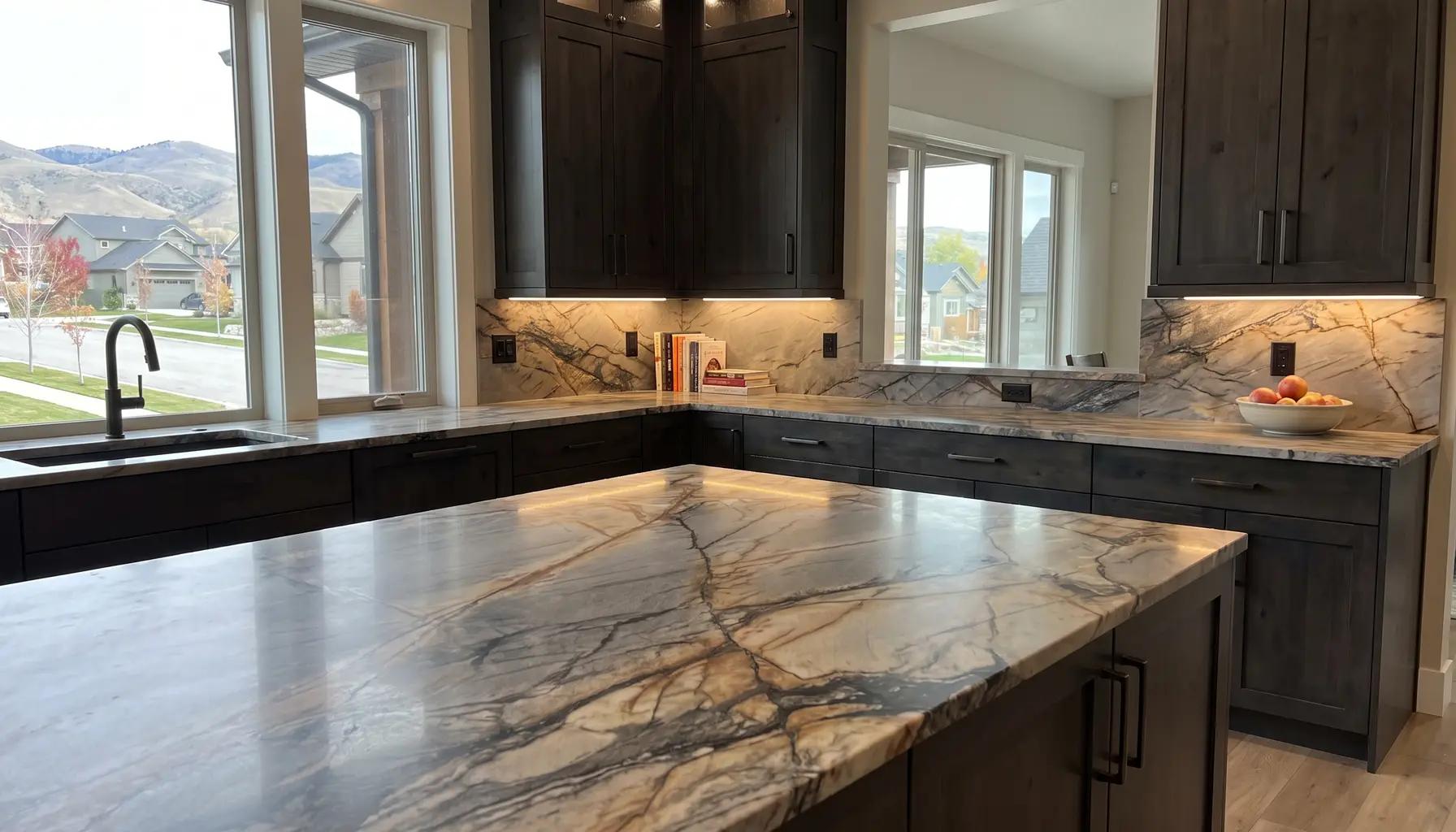
The confusion starts with the names, so start there. Quartz countertops are engineered: manufacturers grind natural quartz into a fine aggregate, mix it with polymer resins and pigments, and press it into slabs. Because it is made rather than quarried, quartz has consistent color and pattern from slab to slab, contains no natural fissures, and is completely non-porous. Quartzite is a natural stone, quarried in solid slabs. It begins as sandstone and, under intense heat and pressure deep in the earth, recrystallizes into an extremely hard stone - often with flowing, marble-like veining. Every quartzite slab is unique, and because it is natural stone, it has pores and needs sealing. So the one-word difference in the name hides a big difference in origin: one is manufactured for consistency, the other is quarried for natural character. Keep that distinction in mind and the rest of the comparison follows logically.
Durability and hardness
Tap to expand
Durability and hardness
Both surfaces are very durable, but in different ways. Quartzite is harder - it genuinely scores higher on the mineral hardness scale than most granite and quartz, which makes it exceptionally scratch- and chip-resistant. You can cut on it (though a cutting board is still smart to protect your knives). Quartz is tough and impact-resistant too, and because it has no natural fissures, it resists chipping at edges and corners well. The practical takeaway: both will stand up to decades of hard family use. If sheer scratch resistance is your priority - you tend to work directly on the counter and want the most bulletproof surface - quartzite has the edge. For everyday durability, either will outlast the trends in your kitchen.
Heat resistance - the biggest practical difference
Tap to expand
Heat resistance - the biggest practical difference
This is where they diverge most, and it matters day to day. Quartzite is natural stone and highly heat-resistant - you can set a hot pan on it with little worry, though trivets are still recommended to be safe. Quartz contains resin, which can scorch, discolor, or even crack when exposed to sudden high heat, so you must always use a trivet or hot pad. If you are the kind of cook who pulls a pan off the burner and sets it straight on the counter, quartzite forgives that habit and quartz does not. Many homeowners choose quartzite specifically for this reason, especially serious home cooks. If you are disciplined about trivets, this difference matters less - but it is real, and it is worth being honest with yourself about how you cook.
Maintenance and sealing
Tap to expand
Maintenance and sealing
Here the advantage flips to quartz. Because quartz is non-porous, it never needs sealing and it does not absorb liquids - wine, coffee, oil, and juice wipe away without staining, and cleanup is just soap and water. It is about as low-maintenance as a countertop gets. Quartzite, being natural stone, is porous and must be sealed - once at installation and then periodically, often about once a year, though it depends on the specific slab. Sealing is not difficult; it is a wipe-on product that takes a few minutes. But if a spill sits on unsealed or under-sealed quartzite, it can stain. For a household that wants the lowest-maintenance surface and does not want to think about sealing schedules, quartz is the easier companion. For those who do not mind a small annual ritual in exchange for natural stone, quartzite is very manageable.
Appearance and design
Tap to expand
Appearance and design
Both can be beautiful, but they offer different kinds of beauty. Quartz gives you consistency and range: it is engineered in a huge palette, from crisp whites and solid colors to convincing marble and concrete looks, and because it is manufactured, the slab you approve is the pattern you get, with predictable seams. That control is a real advantage in a kitchen where you want a specific, even look. Quartzite gives you natural drama: flowing veins, depth, and one-of-a-kind character that engineered surfaces imitate but rarely match, in whites, grays, and warm tones with striking movement. Homeowners who want that authentic natural-stone look - the kind that becomes the centerpiece of the kitchen, especially on a waterfall island - often choose quartzite for exactly that reason. If you love the idea of a surface no one else has, quartzite delivers it; if you want a controlled, predictable design, quartz does.
Cost comparison
Tap to expand
Cost comparison
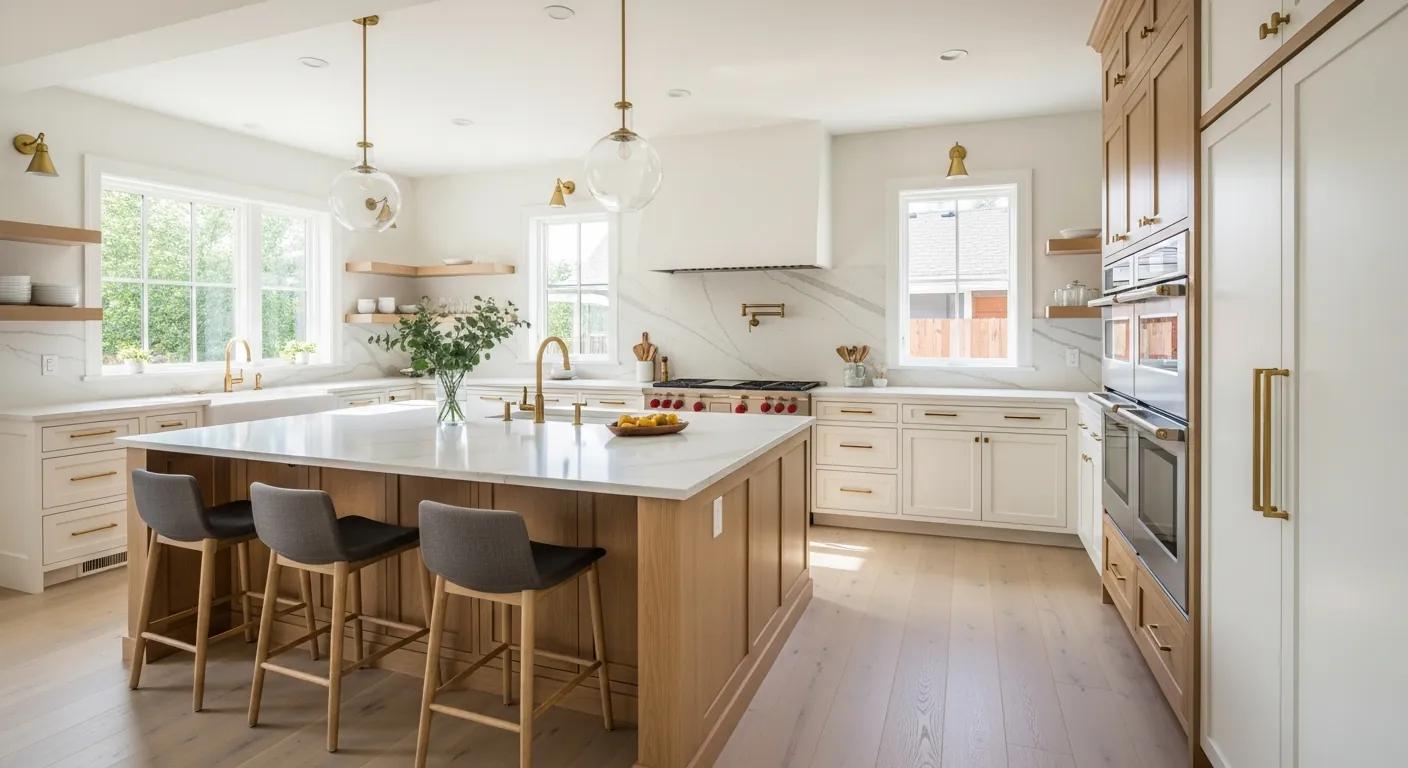
People assume one is clearly cheaper, but their price ranges overlap heavily. Both are premium surfaces well above laminate and entry-level granite. Quartz pricing is fairly predictable and driven mostly by brand and pattern. Quartzite pricing is more variable: because the stone is so hard, fabrication takes longer and can cost more, and exotic or highly figured slabs can be quite expensive - while more common quartzite can be reasonable. In many Boise kitchens, the installed cost of a mid-range quartz and a moderate quartzite lands in a similar neighborhood, so cost alone rarely decides it. What moves the number more is total square footage, edge details, the number of seams, and cutouts. For how countertops fit into a full budget, see our kitchen remodel cost guide and what impacts remodeling costs.
Finishes, edges, and thickness
Tap to expand
Finishes, edges, and thickness
Beyond the material itself, a few fabrication choices shape both the look and the price, and they apply to whichever surface you pick. Finish is the first: a polished finish is glossy and reflective, brightening a kitchen and showing color and veining at their most vivid, while a honed or leathered finish is matte and softer, hiding fingerprints and water spots better but sometimes showing more on porous quartzite. Quartz is most commonly polished but comes in matte options; quartzite can be honed or leathered for a more natural, understated look. Edge profile is the second: a simple eased or square edge reads clean and modern and costs the least; a mitered edge that creates a thick, substantial look and the dramatic waterfall edge, where the stone runs down the side of an island to the floor, cost more because they use more material and labor - but they make a striking centerpiece, especially with quartzite's veining. Thickness matters too: standard slabs are about three centimeters (roughly 1.25 inches), and a thicker built-up edge adds presence at added cost. Finally, plan for seams - where two slabs meet - since their number and placement depend on your layout and slab size; a skilled fabricator hides them well, but a large kitchen or a big island may require them. These details are where two quotes for the "same" countertop can differ, so it pays to compare edge, finish, and seam plans, not just the material name.
How to choose between them
Tap to expand
How to choose between them
Boil it down to three questions. First, how do you cook? If you routinely set hot pans directly on the counter and want the hardest, most scratch-proof surface, lean quartzite. Second, how much maintenance do you want? If you want to never think about sealing and want stain-proof simplicity, lean quartz. Third, which look do you want? If a one-of-a-kind natural stone with dramatic veining is the dream, quartzite; if you want a specific, consistent, predictable pattern, quartz. There is no wrong answer here - both are excellent, and plenty of beautiful Boise kitchens use each. The mistake is choosing on name or assumption rather than on how the surface will actually live with your habits. When you see full slabs in person and think through your cooking style, the right one usually becomes obvious.
Where granite, marble, and butcher block fit
Tap to expand
Where granite, marble, and butcher block fit
Quartz and quartzite are the two most-compared premium surfaces, but they are not the only options, and a good design conversation weighs them against the alternatives. Granite remains a durable, natural-stone value that also needs sealing. Marble offers unmatched elegance but is soft and stains easily, making it a love-it-or-avoid-it choice for a working kitchen. Butcher block brings warmth and works beautifully as an accent on an island or a section of counter, though it needs oiling and is not ideal around the sink. Many kitchens mix materials - a durable quartz or quartzite on the perimeter with a butcher-block or contrasting island top - to get the best of each. The right countertop strategy considers the whole kitchen, not a single slab, alongside your cabinets and island.
See the slabs, then decide
Tap to expand
See the slabs, then decide
Countertops are one of the few remodel decisions you really should make in person - photos flatten the veining and color that make each material special. Our free in-home consultation includes guidance on surfaces that fit your kitchen, your cooking, and your budget, and we will point you to slab yards to see full pieces before you commit. When you are ready, schedule a consultation, use the instant estimator, or read the full Boise Kitchen Remodeling Guide.