How long a whole-home remodel takes
Tap to expand
How long a whole-home remodel takes
A whole-home remodel typically takes six months to a year or more from start to finish: design and permitting usually run two to four months before construction, and construction itself commonly takes four to nine months depending on the size of the home, the scope, and whether the layout and systems change. Structural work, plumbing and electrical updates, custom materials, and the sheer number of rooms and trades all drive the timeline, and most households move out for the duration. A whole-home remodel is the largest residential project there is - touching every room and nearly every system - so its timeline is measured in months, not weeks. Understanding the realistic schedule and what drives it helps you plan. This guide walks through it phase by phase. It is part of our Whole-Home Remodeling Guide.
The two big phases
Tap to expand
The two big phases
Like any major project, a whole-home remodel has a pre-construction phase and a construction phase, and on a project this large, pre-construction is substantial. Design and permitting typically take two to four months - more than a single-room project - because designing an entire home is a major undertaking involving space planning across every room, material selections throughout, often structural engineering, and a more complex permitting process. Every decision, from the kitchen layout to the flooring in the bedrooms, gets made and documented in this phase, and all materials are selected and ordered. Construction then runs four to nine months or more, depending on the home's size and the scope. The investment in a thorough pre-construction phase is even more critical on a whole-home project than a small one: with so many rooms, trades, and materials to coordinate, nailing down every decision and getting materials on hand before demolition is what keeps the long construction phase moving without costly stalls. Rushing into construction on a whole-home remodel before the planning is complete is a recipe for delays and budget overruns across the entire project.
The construction sequence
Tap to expand
The construction sequence
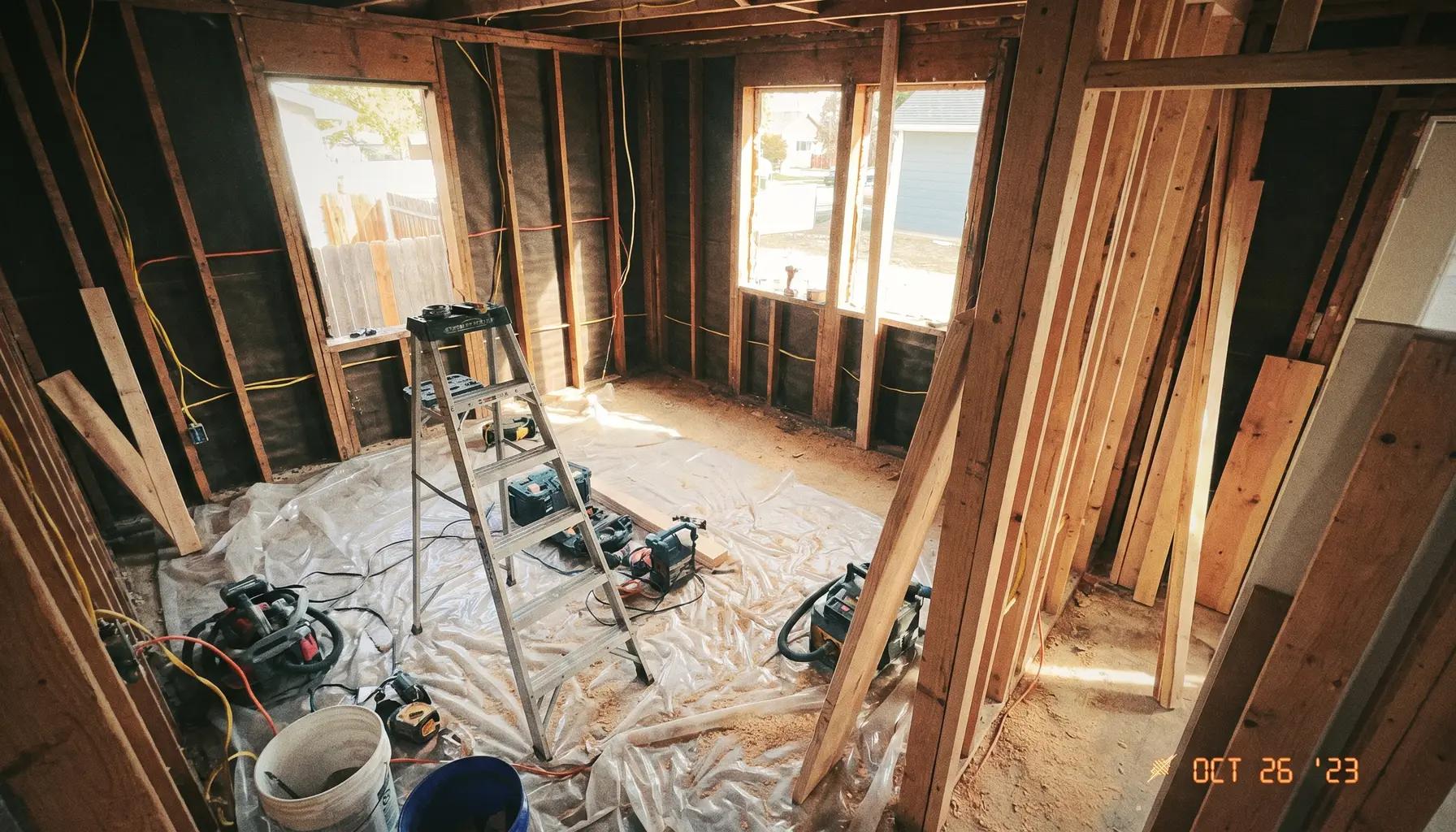
Whole-home construction follows a logical order, with the whole house progressing through each stage. It begins with demolition - removing finishes, and sometimes taking rooms down to the studs across the home. Then comes any structural work - removing or moving walls, adding beams, addressing the foundation or framing - which must be done before the systems go in. Next are the rough-ins: plumbing, electrical, and HVAC run throughout the house, frequently updated or replaced entirely in an older home, followed by inspections. Then insulation and drywall go in across every room. After that, the long finish phase begins - flooring, cabinetry, countertops, tile, interior doors and trim, paint, light fixtures, and plumbing fixtures - room by room throughout the home, which is the most time-consuming stage because of the volume of detailed work. Finally, final inspections and a punch list complete the project. Each stage depends on the ones before it, and because it is happening across an entire house rather than one room, each stage takes considerably longer than it would in a single-room remodel. This sequential, whole-house progression is why the construction phase spans many months.
What drives the timeline
Tap to expand
What drives the timeline
Several factors determine where a whole-home remodel lands in the range. The size of the home is the most obvious - more square footage and more rooms mean more of every kind of work. The scope matters enormously: a cosmetic refresh of finishes throughout is far faster than a gut renovation that replaces systems and reconfigures the layout. Structural changes - removing walls, opening up floor plans, addressing foundation or framing issues - add time and complexity. Updating systems - re-plumbing, rewiring, and replacing HVAC throughout an older home - is time-intensive but often essential in a full remodel. Custom and special-order materials - cabinetry, windows, tile, specialty items - carry lead times that can delay the schedule if not ordered early. And surprises uncovered during demolition, more common in older homes, can add time for unexpected repairs. Knowing which of these apply to your home lets you set a realistic expectation. A contractor experienced with whole-home projects can assess your home and scope and give you a timeline that accounts for these factors, including sensible buffers for the surprises that large, older-home remodels tend to reveal.
Moving out and why it helps
Tap to expand
Moving out and why it helps
For a whole-home remodel, most households move out, and it is worth understanding why this is usually the right call. Because the remodel affects every room and periodically shuts off water, power, and heat as systems are updated, the home is generally unlivable during construction - there may be no functioning kitchen or bathroom for extended stretches, dust everywhere, and safety hazards throughout. Beyond livability, moving out actually speeds the project and improves safety: crews can work efficiently across the whole house without protecting a household's daily-use spaces or navigating around people living on-site, and there is no need to keep areas functional mid-construction. While relocating for months is a real consideration - and a cost to budget for, whether a rental, extended stay, or time with family - it typically results in a faster, smoother, less stressful remodel than trying to live through a full-home renovation. For projects where staying is unavoidable, our living through a remodel guide covers how to manage it, but for a true whole-home remodel, planning to move out is usually the wisest approach. Discuss the living arrangement with your contractor early, since it affects both the schedule and your budget.
Phasing versus all at once
Tap to expand
Phasing versus all at once
Some homeowners consider phasing a whole-home remodel - completing certain rooms or zones at a time rather than everything at once. Phasing can spread out the cost over time and let a household keep living in part of the home, which appeals to those who cannot move out or fund the whole project at once. However, phasing generally costs more overall and takes longer than doing everything together, because crews mobilize and demobilize repeatedly, work is less efficient, and some tasks (like updating systems that run throughout the house) do not divide neatly by room. Doing a whole-home remodel all at once is usually the most efficient and economical approach when budget and living arrangements allow, because the trades work continuously through the house in the optimal sequence. The right choice depends on your finances, whether you can relocate, and how the work is best sequenced - a decision worth discussing honestly with your contractor. For many, a single coordinated project delivers the best result and value; for others, phasing is the practical path. Either way, understanding the trade-offs helps you choose deliberately rather than by default.
Older Boise homes and hidden surprises
Tap to expand
Older Boise homes and hidden surprises
The Treasure Valley has a wide range of housing, from historic North End and Boise Bench homes to mid-century ranches and newer builds, and a home's age significantly affects a whole-home remodel's timeline. Older homes, in particular, tend to hold hidden surprises that surface once walls open: outdated knob-and-tube or aluminum wiring that must be replaced, galvanized or failing plumbing, inadequate or absent insulation, undersized electrical service, asbestos or lead in older materials, and structural quirks from decades of prior work. Each of these, once discovered, requires time to address before the remodel can proceed - and a whole-home remodel, by touching every room, tends to uncover more of them than a single-room project. This is not a reason to avoid remodeling an older home - many have wonderful bones and character worth preserving - but it is a reason to build extra time and budget contingency into the plan for an older home, and to work with a contractor experienced in the particular systems and surprises of the era your home was built. A realistic whole-home timeline for an older home anticipates that some hidden issues will be found and allows time to handle them properly, rather than assuming the best case and being derailed when the inevitable surprise appears. Planning for the reality of older-home renovation is part of setting an honest, achievable schedule.
Keeping it on schedule
Tap to expand
Keeping it on schedule
On a project as large as a whole-home remodel, staying on schedule depends heavily on decisions made before and early in the work. Finalize the design and every single selection before construction - with so many rooms and materials, unmade decisions are the top cause of delay. Order all long-lead materials early, since a back-ordered cabinet line or window package can stall an entire phase. Avoid changes once work begins, because on a whole-home project a single change can ripple across multiple trades and rooms. Hire a contractor who excels at coordinating many trades - a whole-home remodel lives or dies on scheduling and communication, and a well-organized design-build team that manages design, ordering, and the trade sequence under one roof is invaluable here. And build a realistic buffer into the timeline for the surprises that large, older-home remodels inevitably uncover. Most delays on whole-home projects trace back to late decisions, change orders, or waiting on materials - all reducible with thorough planning and an experienced team. With realistic expectations and solid preparation, a whole-home remodel, though a months-long endeavor, proceeds predictably and delivers a completely transformed home. For how the timeline relates to cost, see our whole-home remodel cost guide.
Get a realistic timeline for your home
Tap to expand
Get a realistic timeline for your home
The best way to know how long your whole-home remodel will take is to have your home and goals assessed by a team that will actually do the work. Timeline planning is built into every whole-home remodel we take on. Our free in-home consultation includes a realistic timeline alongside an honest budget and a plan for the whole project. When you are ready, schedule a consultation, use the instant estimator, or read the full Whole-Home Remodeling Guide.