Covered patios for year-round outdoor living
Tap to expand
Covered patios for year-round outdoor living
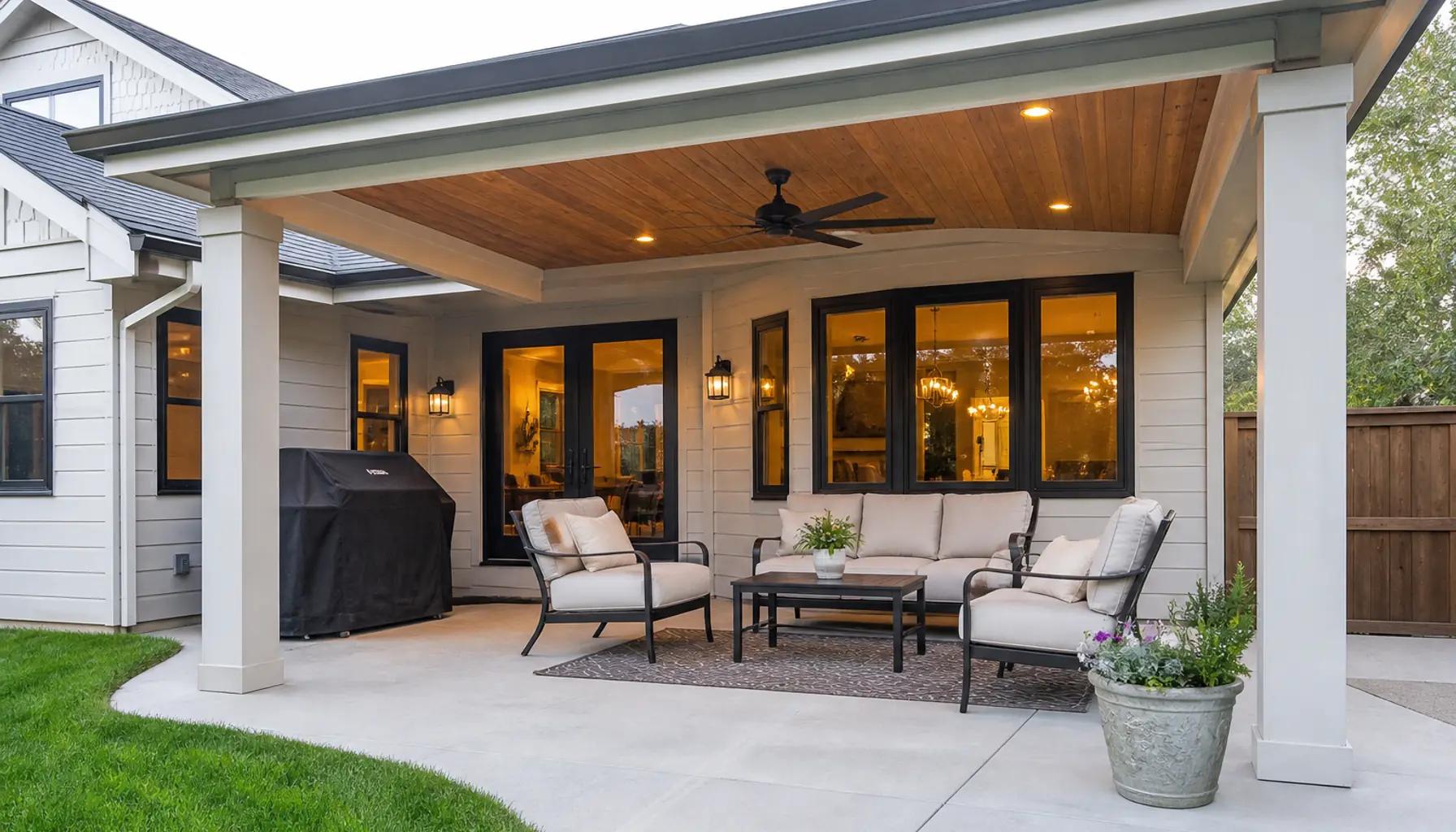
A covered patio adds a roof over a patio to create a shaded, sheltered outdoor room usable in far more weather. Options range from a solid-roof patio cover, which fully protects from sun, rain, and snow, to a pergola, which offers partial shade and an open feel. In Boise, the structure must be built to handle snow loads and sun, usually requires a permit, and is best matched to the home's architecture. Cost varies with size, roof type, materials, and whether it is attached or freestanding. A cover transforms a patio from a sometimes-used, weather-dependent space into an all-season outdoor room, dramatically extending how much you enjoy your yard - shading it in summer, sheltering it in rain, and keeping it usable through the snowy months when an open patio would sit empty. This guide covers the types, materials, and considerations. It is part of our Outdoor Living Remodeling Guide.
Why cover a patio
Tap to expand
Why cover a patio
An uncovered patio is at the mercy of the weather - too hot in the summer sun, unusable in rain, and exposed to snow in winter - so it often gets used far less than homeowners hoped. A cover changes that by creating a sheltered space you can use across much more of the year. It provides shade on hot summer days, making the patio comfortable when an open one would be scorching; protection from rain, so a gathering is not canceled by a shower; and, with a solid roof, shelter from snow, keeping the space and furniture usable and protected in winter. A cover also protects your investment - patio furniture, an outdoor kitchen, and the patio surface itself all last longer out of the direct sun, rain, and snow. And it creates a genuine outdoor room, an extension of the home's living space that feels intentional and inviting rather than exposed. In the Treasure Valley's climate of hot summers, pleasant shoulder seasons, and snowy winters, a covered patio is one of the best ways to actually get year-round value from outdoor space, turning a fair-weather-only patio into a favorite spot for much more of the year. That extended usability is the core reason to cover a patio.
Solid roof versus pergola
Tap to expand
Solid roof versus pergola
The first design decision is the type of cover, primarily a choice between a solid roof and a pergola. A solid-roof patio cover has a closed roof that provides full protection from sun, rain, and snow, creating a true sheltered outdoor room usable in nearly any weather - the best choice for maximum protection, all-weather use, and sheltering an outdoor kitchen or furniture. A pergola has an open or slatted top that provides partial shade and an airy, open feeling, letting some light and air through; it looks light and architectural and softens sun, but it does not fully block rain or snow. Pergolas suit those who want partial shade, openness, and a decorative structure rather than complete shelter, and they can be enhanced with retractable canopies or climbing plants. There are also hybrid and louvered options - adjustable-louver roofs that open for sun and close for shade or rain - offering flexibility at a higher cost. The right choice depends on your priorities: choose a solid roof for full protection and all-season use (often the better fit given Boise winters), or a pergola for a lighter, more open feel with partial shade. Many Treasure Valley homeowners choose a solid cover precisely because it delivers the year-round, weatherproof usability that makes the biggest difference.
Attached versus freestanding
Tap to expand
Attached versus freestanding
A second decision is whether the cover is attached to the home or freestanding. An attached cover connects to the house, typically extending the roofline, so it feels like a natural extension of the home and creates a seamless indoor-outdoor flow - ideal for a patio directly adjacent to the house and for making the outdoor room feel connected to the interior living spaces. It requires proper integration with the home's structure and roof. A freestanding cover stands on its own separate structure, offering flexibility in placement - useful for a seating area set away from the house, a poolside space, a detached outdoor kitchen, or situations where attaching to the home is impractical or undesirable. Freestanding structures can be positioned wherever they best serve the yard and can become a destination within the landscape. The choice depends on the patio's location, the home's structure, and the look you want - attached for a connected extension of the home, freestanding for placement flexibility and a standalone outdoor room. Both can be beautiful and functional when well designed; the decision is about how the covered space relates to the house and the yard. A designer can help determine which suits your specific layout and goals, and how to integrate an attached cover cleanly with your home's architecture.
Materials, snow loads, and permits
Tap to expand
Materials, snow loads, and permits
In Boise, a covered patio must be engineered and built for the climate, which makes materials and construction quality critical. The structure has to handle snow loads - the weight of accumulated winter snow - which is precisely why a covered patio is not a flimsy add-on but a real structure that must be properly designed and built to code. This also means a covered patio typically requires a building permit and engineering, especially a solid-roof cover attached to the home (see our Boise permit guide). Materials should suit the outdoors and the home: wood (properly finished and maintained), metal/aluminum (durable and low-maintenance), and various roofing materials each have trade-offs, and the structure's posts, beams, and footings must be sized for the loads. Matching the cover's materials and style to the home's architecture - rooflines, colors, and detailing - is essential so it looks like an intentional part of the home rather than a tacked-on afterthought, which is a common failing of cheap covers and a hallmark of quality ones. Because of the snow-load engineering, permitting, and integration required, a covered patio is best built by a contractor experienced in outdoor structures who ensures it is safe, code-compliant, durable, and well-matched to your home. Proper construction is what lets a cover safely carry Idaho winters and last for decades.
Enhancing the covered patio
Tap to expand
Enhancing the covered patio
A covered patio becomes far more than shelter when thoughtfully outfitted. Lighting - recessed lights, string lights, or fixtures - makes the space usable and inviting after dark. Ceiling fans add comfort on hot summer days, and heaters (or a fire feature) extend use into cool evenings and the shoulder seasons, and even mild winter days. A finished ceiling, whether wood or another material, elevates the look from utilitarian to a true outdoor room. Many homeowners pair a covered patio with an outdoor kitchen, since the cover protects the appliances and makes the cooking and dining space usable in more weather - the two features complement each other beautifully. Comfortable, weather-appropriate furniture, a TV for game days, and even screens or shades to block low sun, wind, or insects can all enhance the space. These additions turn a basic covered patio into a genuine extension of the home's living space - an outdoor living room, dining room, and entertaining area rolled into one, usable across much of the year. When planning a covered patio, consider which of these enhancements fit how you want to use the space, since they are far easier to integrate during construction (running electrical for lights, fans, and heaters, for example) than to add later. A well-appointed covered patio is often a household's favorite room, indoors or out.
Cost and value
Tap to expand
Cost and value
Covered patio cost varies with size, roof type, materials, structure, and enhancements. A simple pergola is the most affordable; a solid-roof cover costs more, and a fully finished cover with an insulated roof, ceiling, lighting, fans, and heaters costs the most. Whether the cover is attached or freestanding, any needed slab or foundation work, matching the home's materials, and permits all factor in. Because it is an engineered structure requiring proper construction and permitting, a quality covered patio is a real investment, more akin in nature to a small addition than to a simple purchase. On value, a well-built covered patio can add appeal and some resale value by creating desirable, usable outdoor living space, though as with outdoor living generally, the return varies with quality and integration and favors tasteful, well-matched builds - our exterior remodeling ROI guide discusses outdoor living's value. The larger payoff for most households is enjoyment and use: a cover so dramatically extends when the patio is usable that it transforms outdoor space from an occasional amenity into a regularly enjoyed part of the home. Building the right cover for your patio, home, and how you want to use it delivers that year-round enjoyment while adding lasting appeal. And because a well-built, properly engineered cover lasts for decades and protects everything beneath it, the investment continues paying off in use, protection, and appeal for many years - making a quality covered patio one of the more rewarding outdoor living projects a Treasure Valley homeowner can undertake.
Add a covered patio to your home
Tap to expand
Add a covered patio to your home
A covered patio turns weather-dependent outdoor space into an all-season outdoor room - built to handle Idaho's seasons and matched to your home. Our free in-home consultation helps you choose the right cover and design it to fit your patio, home, and budget. When you are ready, schedule a consultation, use the instant estimator, or read the full Outdoor Living Remodeling Guide.